3D Layered Mandala Unicorn: A Practical Evaluation for Laser Cutting and Digital Crafts
The intersection of intricate digital design and physical fabrication has created a unique niche for creators who value depth and texture in their work. The 3D Layered Mandala Unicorn represents a specific approach to this challenge, offering a multilayered vector asset designed to transcend flat surfaces. Unlike standard single-layer cut files that produce simple silhouettes, this design leverages three distinct layers to construct a dimensional object. This distinction is critical for professionals and hobbyists alike who are looking to elevate the visual impact of cards, invitations, wall art, or laser-cut projects without resorting to complex manual assembly techniques.
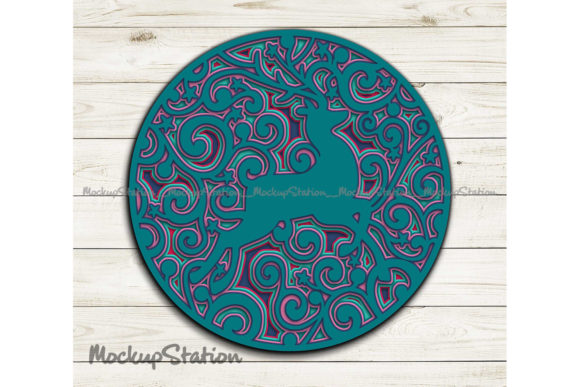
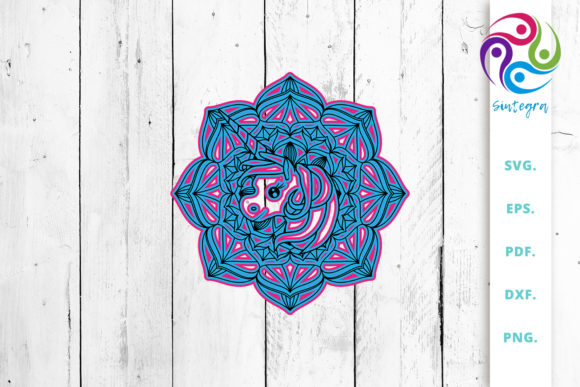
At its core, the 3D Layered Mandala Unicorn is not merely an image; it is a structural blueprint. The mandala pattern provides a symmetrical, geometric foundation, while the unicorn motif adds a whimsical focal point. The true utility lies in the separation of these elements into three discrete layers. When utilized correctly, these layers allow the creator to introduce physical depth through stacking. By placing one layer atop another with spacers, such as foam dots, the resulting piece gains shadow and dimensionality that flat vinyl or single-pass laser cuts simply cannot achieve. This capability transforms a standard craft project into a piece of tactile art suitable for display or high-end gifting.
Technical Specifications and File Integrity
For any digital asset intended for production, the integrity of the source files determines the quality of the final output. The package for the 3D Layered Mandala Unicorn is comprehensive, addressing various workflow requirements from initial design to final cutting. Users receive a robust suite of formats including 1 DXF file, 1 EPS file, 1 SVG file containing all three layers, and a PDF guide. Additionally, the inclusion of 300 dpi PNG files ensures that previewing and printing mockups remain sharp.
A significant advantage of this collection is the provision of separated layer files. Beyond the master SVG with combined layers, users are provided with 3 individual SVG files and 3 corresponding PNG files for each layer. This modularity is essential for troubleshooting and customization. If a user wishes to alter the color scheme of just the middle layer or adjust the scale of the unicorn head independently, having isolated files prevents the need to manually trace or ungroup complex vectors within software like Adobe Illustrator. The availability of DXF and EPS files further broadens compatibility, ensuring that the design can be imported into professional CAD software or older versions of cutting machine software that may not support the latest SVG standards.
Workflow Compatibility and Software Integration
The effectiveness of the 3D Layered Mandala Unicorn relies heavily on the software ecosystem used by the operator. The design is optimized for industry-standard tools such as Cricut Design Space, Silhouette Studio, and Adobe Illustrator. These platforms are capable of interpreting the layered structure, allowing users to assign different colors or materials to specific parts of the design before cutting. However, successful execution requires a basic understanding of how these programs handle stacked objects.
When preparing the design for a cutting machine, it is imperative to verify that the software recognizes the separate layers as distinct entities. In many cases, the default view may merge the layers into a single group. Users must ensure they can ungroup the elements to manipulate the spacing between them. For those using Cricut machines, the "Print then Cut" feature might be relevant if the goal involves printed paper rather than solid material cutting, though the primary intent of this file is mechanical separation. Similarly, Silhouette Studio users should utilize the "Weld" or "Attach" functions carefully to maintain alignment during the cutting process. The design's complexity means that simpler, automated settings often fail to capture the nuance required for a clean 3D effect.
Material Considerations and Physical Assembly
While the digital file is versatile, the physical realization of the 3D Layered Mandala Unicorn depends on material selection. The prompt notes that these designs may be more qualified for larger sizes or vinyl applications to maintain detail. This observation is accurate; small-scale cuts of intricate mandala patterns can result in fragile pieces that are difficult to assemble. For laser cutting, materials like acrylic, wood, or MDF offer the rigidity needed to hold the layers apart. For vinyl or cardstock projects, the use of adhesive foam tape or pre-cut foam sheets is necessary to create the 3D gap.
The thickness of the layers plays a crucial role in the aesthetic outcome. Thicker materials will cast deeper shadows, enhancing the 3D illusion but requiring stronger adhesives to hold the weight. Conversely, thinner materials may collapse under their own weight if the layers are too far apart. A practical recommendation is to test the assembly on scrap material first. The flexibility of the design allows for experimentation; some creators prefer a tight stack where the layers touch, creating a subtle relief, while others maximize the distance to create a dramatic pop-out effect. The multilayered nature of the 3D Layered Mandala Unicorn supports both approaches, provided the cutting machine can handle the precision required for the fine details of the mandala.
Target Audience and Professional Applications
This asset is particularly valuable for a specific demographic: adults aged 20–50 who operate within creative industries, small businesses, or serious hobbyist circles. For entrepreneurs selling handmade goods on platforms like Etsy, the 3D Layered Mandala Unicorn offers a way to differentiate products. A 3D invitation card or a layered wall hanging commands a higher price point than a flat counterpart due to the perceived labor and craftsmanship involved. The ability to quickly produce these items using a cutting machine streamlines the production process, making it scalable for small business owners.
Educators and makerspaces also benefit from this resource. The project serves as an excellent introduction to vector graphics, layer management, and spatial reasoning. Students can learn how digital coordinates translate into physical space by manipulating the three layers. Furthermore, freelancers and bloggers looking to generate content about DIY crafts can use the finished product as a compelling visual example. The design's versatility extends to event planning, where customized invitations and decor items featuring this motif can add a unique, personalized touch to weddings, birthdays, or themed parties.
Potential Limitations and Realistic Expectations
To provide a balanced evaluation, it is necessary to address potential limitations. The most common issue arises from the font exclusion. The prompt explicitly states that fonts are not included. While the design itself does not rely on text, users wishing to add names or dates to the invitation or card must source compatible fonts separately. This adds a step to the workflow that beginners might overlook. Additionally, the complexity of the mandala pattern means that very small cuts may require a fresh blade or a slower cutting speed to prevent tearing, especially when working with delicate materials like vellum or thin cardstock.
There is also a learning curve associated with the 3D assembly. It is not a "cut and go" solution like a simple silhouette. The user must plan the assembly order, apply adhesive strategically, and ensure the layers align perfectly. If the alignment is off, the symmetry of the mandala is broken, ruining the aesthetic. Therefore, patience and attention to detail are prerequisites. The mockups provided are for presentation purposes only, meaning the final result will vary based on the user's skill level and material choices. The design is a tool, not a guarantee of perfection; the outcome is directly proportional to the care taken during the cutting and assembly phases.
Long-Term Value and Conclusion
In summary, the 3D Layered Mandala Unicorn stands out as a high-value digital asset for those seeking to incorporate depth into their crafting repertoire. Its strength lies in the thoughtful organization of its layers and the variety of file formats provided, which cater to diverse software environments. For professionals and serious hobbyists, it offers a reliable foundation for creating premium-quality items that stand out in a market saturated with flat designs. While it requires a degree of technical proficiency and careful material selection, the payoff in terms of visual impact and product differentiation is significant. Whether used for commercial ventures, educational demonstrations, or personal artistic expression, this design proves that well-structured vector files can bridge the gap between digital creativity and tangible reality.